

Cove Connect Issue #0--? (Bridge)
Interlude

You are maybe telling yourself that I did not review this edition of Cove Connect before publishing and failed to fix the issue name and number… Well, no, I did name it Issue #0—because considering the structure, format, and content you have become accustomed to, this one will not follow it at all. It’s not a creative decision; it’s not a pivot, none of that. It’s just for lack of content. Not inspiration, but content.
Since you are already there, let me tell you:
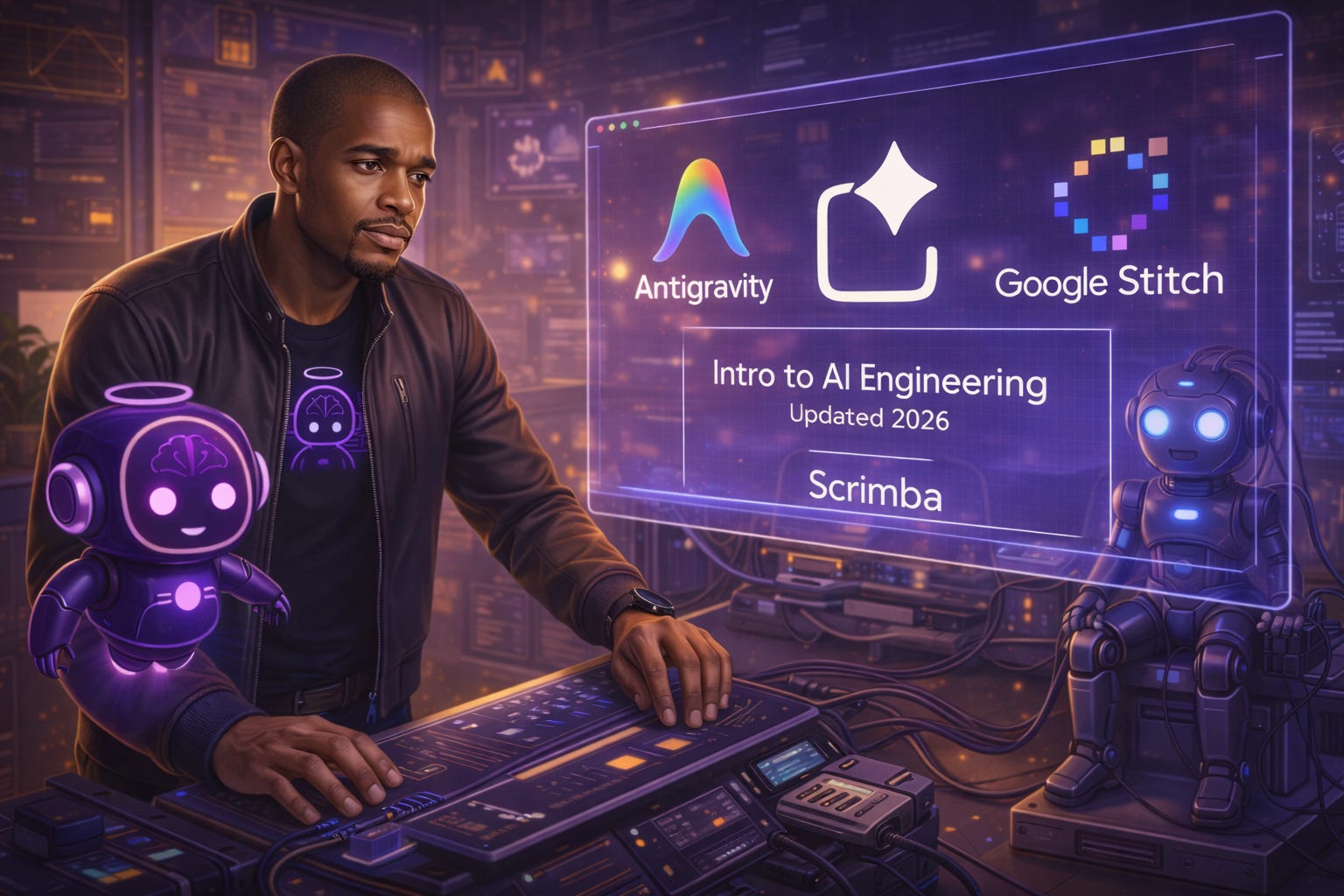
As you may surmise from the cover image and my worried expression, I had some demons to fight this past week. And if you were observant enough, maybe you realized that you haven’t heard much from me during the past week. Well, you haven’t because I was thrust into the Battle of Thermopylae. I had to handle a situation that was outside of my control and thus was not able to properly allocate any time to Substack, Oryn Whisperer, Profit Mirror, or any other tasks and builds I had planned for this week. In fact, ClariSynth was kind enough to provide a brilliant idea that I had started conceptualizing but was also cut short (temporarily).
This is going to be a short edition because it will essentially be a log of the little I was able to accomplish (if I can use this term):
TL;DR
Dev Diary - Scrimba’s Intro to AI Engineering (Updated 2026)
Google’s AI Suite is insane!!! - Antigravity, AI Studio & Stitch
The Oryn Academy - Idea by ClariSynth (Concept)
1. Dev Diary - Scrimba’s Intro to AI Engineering (Updated 2026)
So, kicking it off with the easiest one: If you are part of my Cove Crew, then you know that I am currently taking (rather slowly, I admit) both full-stack developer and AI engineer certification courses on Scrimba (Yes, I am a Scrimbassador, but focus.) And as part of that path, I had completed the “Intro to AI Engineering” module (which is a certification in itself, just part of a bigger path). Now, this module was still using GPT. 4o and I did make the comment that they should update it sometime soon. Well, soon came about, and it was updated just this week (Goodbye, progress! Now, I am back to 9% completion.)
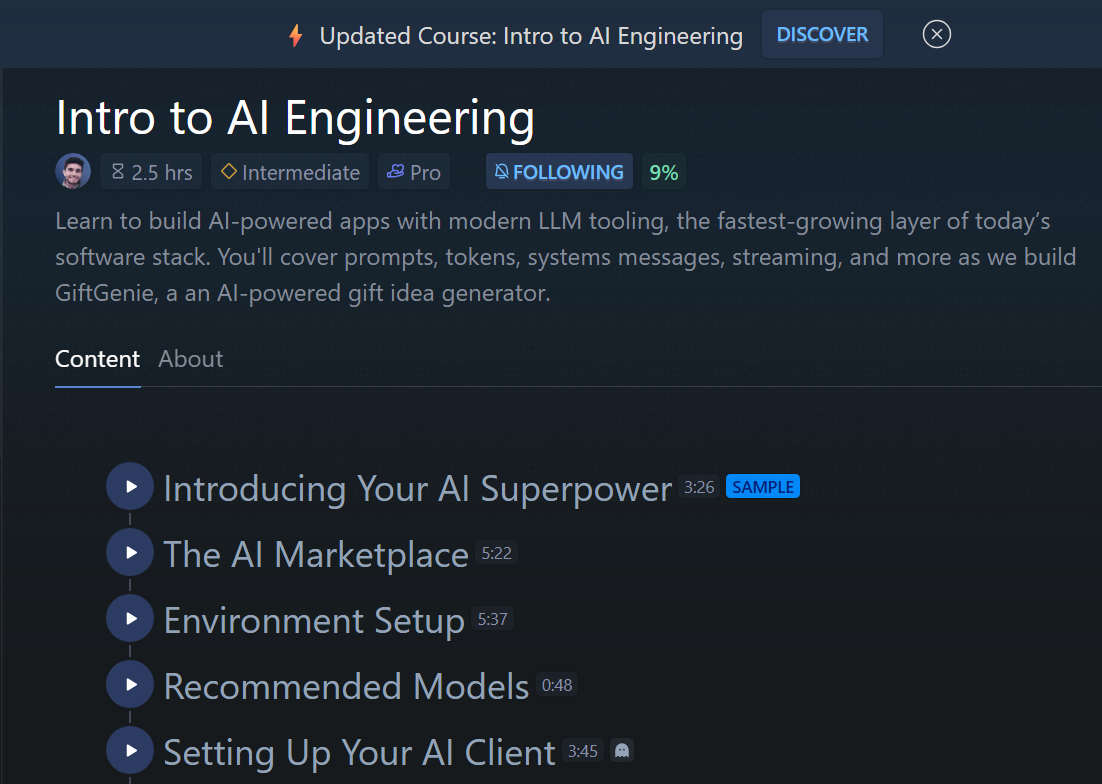
In this updated version, we are using GPT 5.2 to build an AI-powered gift idea generator that suggests thoughtful gifts, named Gift Genie. Thanks to Scrimba’s interactive method of teaching, where you spend more time coding than listening due to their hands-on approach, we will be improving Gift Genie lesson by lesson as new concepts are introduced. From the basic setup, it will evolve into a production-style feature with:
System prompts that control behavior
Structured output (including early JSON patterns)
Safe Markdown rendering and sanitization
Streaming responses for better UX
Error handling and fallback states
Input safety checks and edge-case handling
A secure backend that manages model access
By the end of this course, I’ll be able to explain what AI engineering is (I already can, just in the context of the course; keep up), use system prompts to control model behavior, design predictable UI-friendly output, handle failures, edge cases, and unsafe inputs, move AI interactions to a secure backend, and make informed trade-offs between quality, latency, and cost, among other things. I am quite excited to dive into this updated version of the course and continue with my coding journey.

2. Google’s AI Suite is insane!!! - Antigravity, AI Studio & Stitch
Google has been (not so) silently rolling out a series of apps and tools in its AI suite that are absolutely out of this world. You have seen me write about Warp and Lovable (two very different types of builders; don’t get it twisted), but for some time now, you may or may not have realized that I talk almost every time about Antigravity. Google’s agentic coding platform. Besides Warp, I had never used an agentic platform before. I used Lovable or Replit (briefly) but never one as powerful as Antigravity. I used Cursor once, and well, the date didn’t go well for me. Not that Cursor is bad, just that I don’t like it, is all.
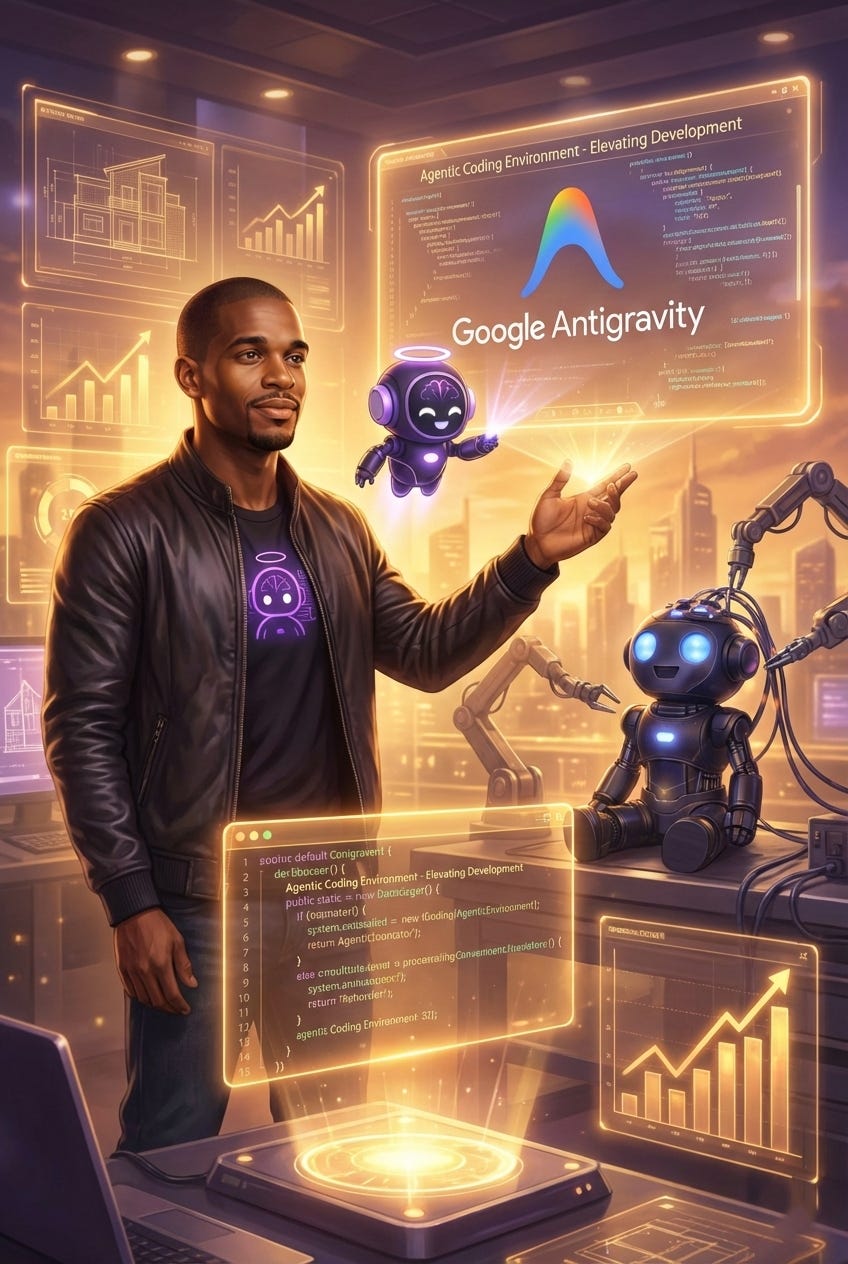
Antigravity’s capabilities are such that I reckon it would take me a whole month to really figure out all of them unless I read the white paper for it. You can build full-stack websites, AI-powered apps, AI systems (automations & agents), SaaS, you name it. You become an orchestrator by deploying different AI agents to execute specific tasks without disturbing each other, nor the main agent actually taking care of the build. Imagine having different devs and engineers, one handling UI, one managing regression, one tasked with research and providing reports to the concerned agent so that it may do its part, and one tasked with security (this is one set of agents; you are free to build your own team). The difference between this and Lovable is that you have to be very specific and craft prompts to build correctly and consistently. You can also insert your own code, which is brilliant! (I swear I am not in any way affiliated to Google or the Antigravity team; I just love it that much.)

Now, the beautiful thing about it is that you can combine it with Google AI Studio and GitHub to build with a system. Imagine that you can design a front-end and basic functionality of the app or website you are working on in Google AI Studio, which one could define as the web-based version of Antigravity, and that you can also now build full-stack apps and websites on it. You could design the frontend there, save it to a GitHub repo, deploy it on Google Cloud, and then go to Antigravity (connected to the same repo) and ask it to use this code as the frontend for the backend you have been building in the meantime on there. Considering that you can also use Google AI Studio on mobile, you could make changes on the go on there, and it would reflect everywhere (GitHub connection).
Wait! There’s more!
Google also has Stitch, an AI tool specifically built to design UI (that is where I designed the first version of the Oryn Whisperer). Same principle. You design your entire UI (hero, dashboards, buttons, feel, visual style, etc.), which you can now connect your AI tools with MCP to push it to GitHub, and Bob’s your uncle! The whole ecosystem Google has created for its AI tools is quite literally insane! And I haven’t explored all of the suite yet. I will do so, but only as the need arises. You may have realized that I don’t scatter to all the AI tools coming out every 2 seconds (Claude Code, GPT Codex, Clawdbot, and so on and so forth). I would never finish in tutorial hell.

However, in the hell I was going through this week, I could not build anything during the day, so I took the opportunity to take some tutorials on YouTube late at night when I am supposed to be sleeping. As I am planning for next week, I have the videos open and am watching how I can use all 3 tools (or 2 at least) to optimize my workflow and build faster, nicer, and most importantly, more responsibly.
3. The Oryn Academy - Idea by ClariSynth (Concept)
My friend ClariSynth was kind enough during the week to make a suggestion on how I could expand my platform further by using my knowledge to introduce aspiring builders to Antigravity and show them how to do it without being intimidated. Somewhere they could see a more human side of me as I guide them through step-by-step roadmaps to building simple websites and/or apps to get them started and break the ice.


As I thought about it, I immediately hopped on Notion and Perplexity and started conceptualizing. More and more, the idea made sense, and I was having a clear vision. I was getting very excited (that was before the crisis I had to handle), and then someone whose opinion and counsel is of absolute value to me (Charles Daymond) gave me the missing piece:
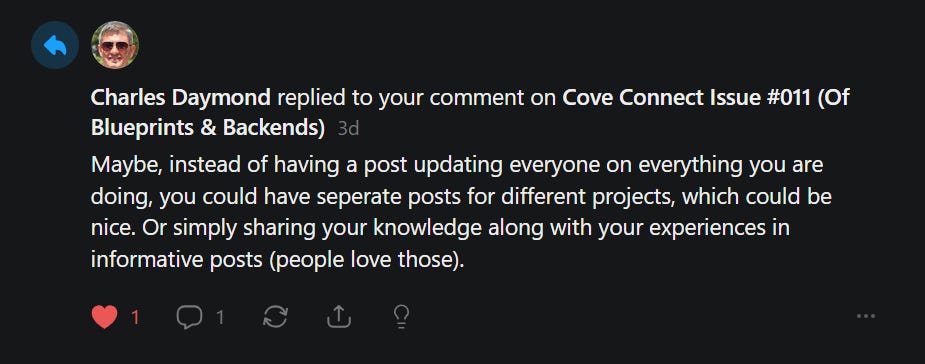
There it was! The connector! I could build a website specifically designed to “teach” (for lack of a better term) aspiring vibecoders and AI builders to build without fear or intimidation by guiding them through a series of prompts and step-by-step checklists that they would be able to adapt to their own projects (I am thinking about building a project idea generator for practice, but let’s focus on the subject at hand), build them, automate them, and deliver them (I read that somewhere). And share snippets of those here on Substack! Maybe even create a new publication as part of Cove Connect.
So I used the GPT project builder I crafted specifically for Antigravity projects along with all the input I gave it, my notes, ideas, and all:
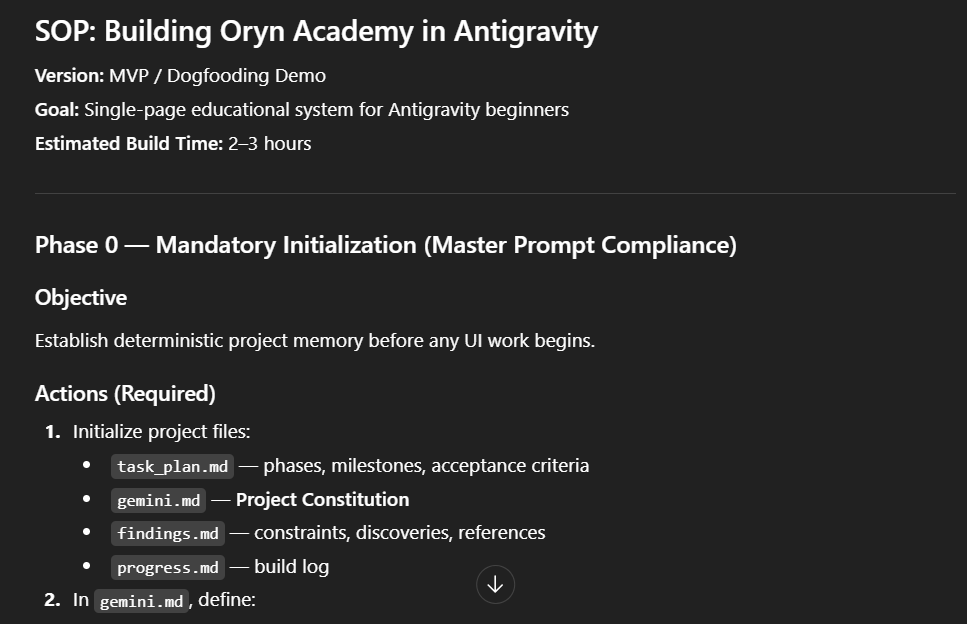
The Oryn Academy is in the works (don’t mind the build time)… Let me just leave this here and have your imaginations lit on fire.
As I mentioned at the beginning, this would be a very short edition with no actual builds or progress on ongoing ones, and therefore I could not, in good conscience, give this edition an issue number or a name. Consider it a bridge between my last edition and the one coming next week, full of progress, actual testable builds, and new projects in the labs. Until then,
Build. Automate. Deliver | Weekly
-Gamal Jastram, Cove Connect.
This is a great post, Gamal, and you shouldn't be so hard on yourself. I think you've seemed to accomplish quite a lot in this week.
The Google AI suite looks absolutely amazing. I have to confess I've not really taken any of its features out for a spin, as I'm somewhat obsessed with Claude Code at the moment, but after reading this post I may have to reconsider that option.
Hey Gamal, I don't know what you are traversing, but I hope you are doing well. It happens to everyone, so no worries (you were still able to post, which is great!). Also thanks for the mention! These new snippets could be usefull to a lot of people and it's a great idea. As I am thinking about it I could use those snippets as well, since I am trying to start an new AI project, but have no idea where to start 😅